
The Fog of War
I returned to Notre Dame’s campus on January 13, 1991 for the second semester of freshman year. On Thursday of that week, “Operation Desert Storm” officially began. The U.S. started an intensive bombing campaign after Saddam Hussein invaded Kuwait, supposedly because Kuwait over-produced oil. Iraq was deeply in debt and wanted Kuwait’s oil. The US feared that the move into Kuwait and a further move into Saudi Arabia would give Iraq control of 40% of the world’s oil.
My friend Rick loved the scud missile vs patriot missile duel. Iraq fired scuds at Israel and Saudi Arabia and the U.S. responded with Patriot missiles. Rick watched Dan Rather since CBS loved to talk about the high-tech missile barrage as though it was a video game. CBS referenced the scud/Patriot standoff as a “bullet hitting a bullet”. And eventually there was a moment where Rather exclaimed “And, boom-ba, right there” as he explained the double thud of the patriot intercepting the scud. We repeated that line often, probably too much, as 18 year old boys might do.
This active war raged for about five weeks but was over quickly with a cease-fire in February, 1991. The U.S. and its allies then spent a decade trying to box in Hussein with no-fly zones, sanctions and weapons inspections. In December, 1998, Saddam Hussein stopped cooperating with inspectors and President Bill Clinton launched a four-day bombing campaign with the goal of degrading Iraq’s ability to produce “weapons of mass destruction” (WMD). A cat and mouse game with Saddam continued until 2003 when George W Bush started Operation Iraqi Freedom. 9/11 put everyone on edge and Iraq once again became a clear target. Oil was the undercurrent. To the U.S., WMD’s or even the threat of them meant Saddam Hussein could potentially hold the world’s energy supply hostage.
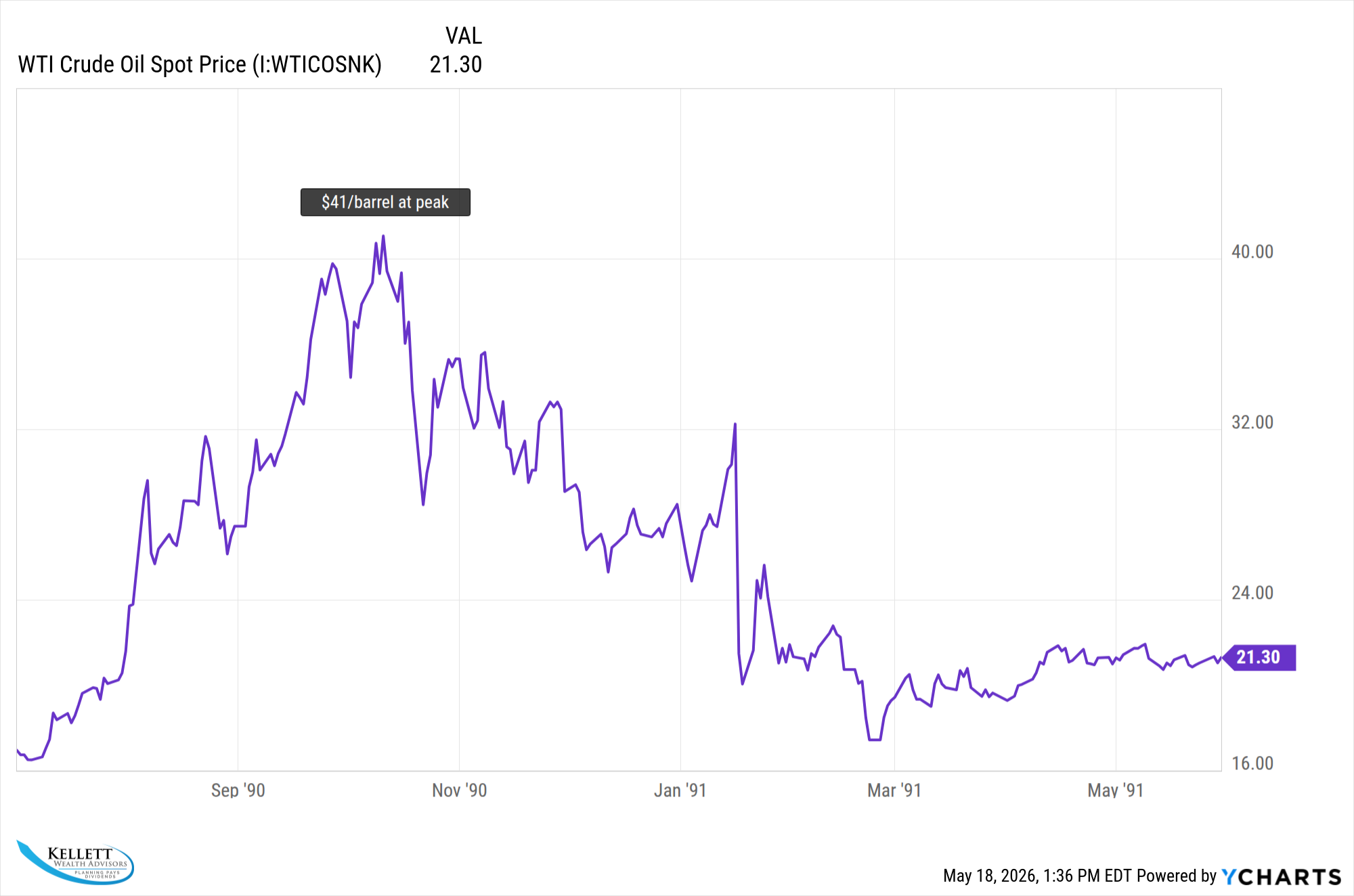
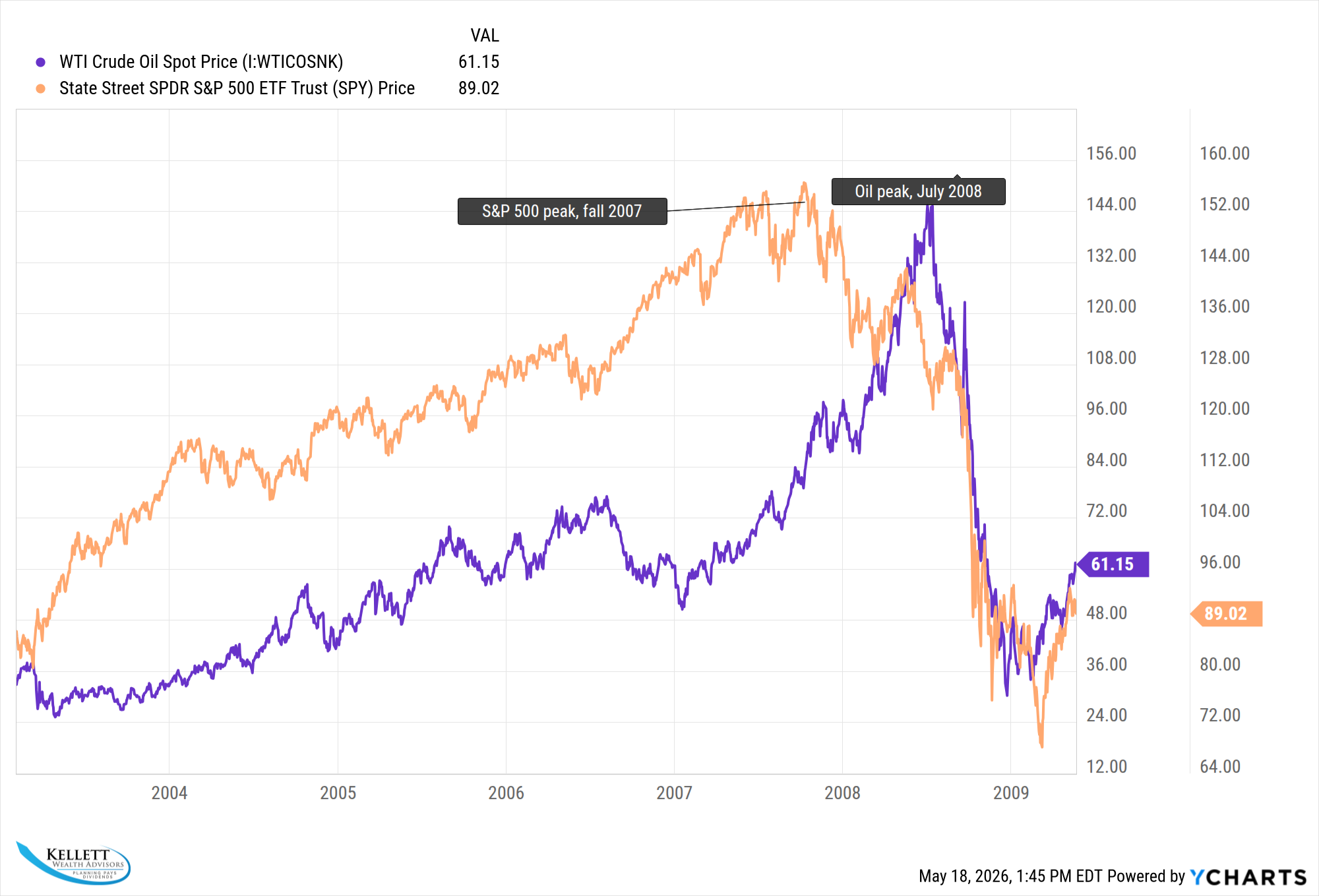
For the purpose of this conversation, I believe the most relevant topic is oil itself. The price of oil doubled from $20 to $40/barrel between Iraq’s invasion of Kuwait and the start of Desert Storm in 1991. Once Desert Storm started, the price of oil dropped. By the time the 100-hour ground war ended in February 1991, oil was back to ~$20/barrel. The 2003 invasion set the stage for oil’s move from $30/barrel to $147/barrel. Once the war started, the chaos, sabotage of pipelines, and years of infrastructure neglect caused Iraq’s production to plummet to near zero. This, alongside a massive boom in demand from growing economies like China caused prices to climb for five years, reaching a high in July 2008…..
—-----------------------------------------------------------------------
My goal with this story is neither to bring politics into this edition of the newsletter, nor to draw a direct comparison between the long Iraqi conflict and the current situation with Iran. It is, though, to point out how confusing war can be. “The fog of war” was first coined in 1832 by Prussian military strategist Carl von Clausewitz. When war rages, the effects are often unclear. Here is a chart of oil in 1990-91. As you can see from the chart, the price of oil started in the teens, spiked above $41, and then settled right back down in the low $20s, muting any effect from the short war.
In 2003, the price of oil started a steady climb from $30 to $140/barrel as the war dragged on. I overlaid the S&P 500 in orange. As you can see, the S&P 500 continued its ascent until it peaked in 2007. In other words, the war continued for 4+ years before the first cracks in the market appeared. The rising price of oil drove global food prices up 75% from 2006 to 2008. Fertilizer tripled, diesel fuel spiked in price to $4/gallon, and home heating bills skyrocketed 30-40% compared to the early 2000s, eating a massive chunk out of the average family’s monthly budget. The typical American household went from spending about 4% of their total budget on energy to nearly 8%.
This was the quiet killer of the mid-2000s economy. Right when families were seeing their home values drop because of the subprime mortgage crisis, the cost of their food, their morning commute, their flights, and their electricity bills were all at historic highs. It effectively squeezed the consumer from both sides, leaving them with no disposable income and forcing the economy to contract.
How does this all compare to today? Right now in 2026, the average U.S. household spends roughly 5.5% to 5.7% of income on total energy. This time around, oil has to spike even more to drive household spending on energy up to 8%. That’s because the electrical grid runs more on natural gas, renewable energy, and nuclear than it did in the early 2000s. To break consumer budgets, gasoline would have to surge to $7.50 or $8/gallon nationally. Crude oil would be at $225-245/barrel to push the price at the pump to these levels.
In the meantime, there are several tailwinds that continue to keep the economy afloat:
1. We are going through another technology boom driven by the AI revolution. It’s being called the largest, most concentrated corporate infrastructure buildout in human history. Tech giants are investing hundreds of billions into data centers, specialized chips, and energy infrastructure. Parallels have been drawn to the 1990s dot com boom and the 19th century railroad boom. Microsoft, Google, Meta (Facebook) and Amazon are leading the way. They are spending on silicon (e.g. Nvidia), data center real estate, and the energy grid.
2. Consumers continue to spend on healthcare services - hospitals, outpatient care, and nursing facilities. Covid most likely delayed care for years. Payer data from major networks (e.g. United Health) show that people are going to the doctor more, as people address elective surgeries and chronic issues they have put off. In addition, the explosion of blockbuster weight-loss and diabetes medications have rewritten the economic numbers.
3. Thanks to the shale boom of the 2010s, the U.S. is now the largest oil producer on earth, pumping an historic 13.6 million barrels per day. While American drivers still feel the pain of $4.00+ gas at the pump due to global pricing, the macro economy is insulated because domestic oil companies are making record profits, keeping the U.S. economy relatively stable compared to European or Asian markets that rely entirely on imports.
4. Government and business policies are actively counteracting the drag from oil. The rollout of new corporate tax structures and personal tax incentives from the “One Big Beautiful Bill Act” has acted like a shock absorber. Goldman Sachs research shows that the personal tax cuts from this legislation boosted average household tax refunds by roughly 17% this year. This liquidity went straight into households right as the oil shock hit, potentially canceling out the sting at the pump.
Summary:
The headlines of a stagnant war, historical precedent, and a closed Strait of Hormuz make it easy to assume the worst. And if the war continues alongside rising oil prices, inflation could certainly derail the economy. It’s entirely possible inflation re-accelerates, causing the new Federal Reserve Chairman to raise interest rates. Unless that happens, the U.S. economy may continue to keep growing, effectively burning off the fog of war.
Jared
What’s Your Financial Story?